How to Create Flash USDT with New Method Using ChainIDE and MetaMask
· based on the channel Rca FastPrint
Key takeaways
- Flash USDT is an ERC20 token created via smart contracts on Ethereum.
- ChainIDE is used as the development environment for contract creation.
- MetaMask connects the Ethereum wallet to interact with Flash USDT contracts.
- The process includes coding, deploying, testing, and verifying smart contracts.
- Users must verify contract details to avoid risks before transactions.
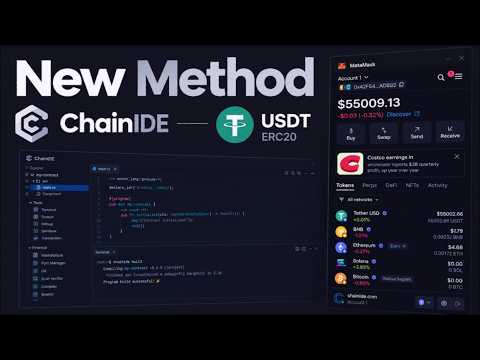
Video: How to Create Flash USDT With New Method 2026
Flash USDT is a new method of creating USDT tokens quickly through smart contract deployment and interaction on the Ethereum blockchain. This guide explains how to create Flash USDT using ChainIDE for development and MetaMask for wallet integration, providing a complete workflow from coding to testing.
Understanding Flash USDT and Its Concept
Flash USDT is essentially an ERC20 token designed to mimic or represent USDT through a flash method that involves quick creation and deployment of tokens via smart contracts. The method leverages Ethereum’s decentralized blockchain to issue tokens programmatically, allowing users to generate USDT-like tokens for testing, educational, or development purposes. It is crucial to understand that these tokens are not official USDT but are created within a controlled environment to demonstrate token creation and interaction.
Setting Up ChainIDE for Flash USDT Creation
ChainIDE is an online integrated development environment tailored for blockchain developers. To create Flash USDT, you first set up ChainIDE by:
- Navigating to the ChainIDE platform.
- Creating a new Solidity project.
- Importing or writing the ERC20 token contract code, specifically adapted for Flash USDT.
- Using the provided script available at Flash USDT ChainIDE Script to ensure the correct contract structure.
The script defines the token’s parameters such as name, symbol, decimals, and total supply, following the ERC20 standard.
Writing and Understanding the ERC20 Contract Structure
The core of Flash USDT creation is the ERC20 smart contract. Key elements of the contract include:
- Token Name and Symbol: Usually set as "Flash USDT" and "fUSDT".
- Decimals: Defines token divisibility, typically 18.
- Total Supply: Initial amount of tokens minted at deployment.
- Functions: Standard ERC20 methods like `transfer`, `approve`, and `transferFrom`.
The contract is written in Solidity, Ethereum's primary programming language for smart contracts. Proper understanding of these functions ensures secure and functional token behavior.
Connecting MetaMask and Deploying Flash USDT
MetaMask is a browser extension wallet that acts as a bridge between your local environment and the Ethereum blockchain. To deploy and interact with Flash USDT:
- Install and set up MetaMask with a test or main Ethereum network.
- Connect MetaMask to ChainIDE by authorizing the platform.
- Compile and deploy the Flash USDT contract from ChainIDE, confirming transactions in MetaMask.
- Once deployed, the contract address appears in MetaMask, allowing token management.
MetaMask provides a user-friendly interface to send, receive, and approve tokens, making interaction with Flash USDT straightforward.
Testing and Verifying Flash USDT Setup
After deployment, thorough testing is essential to ensure the contract functions as expected. Steps include:
- Verifying contract source code on blockchain explorers like Etherscan.
- Testing token transfer between addresses within MetaMask.
- Checking allowances and approvals for spending tokens.
- Monitoring transaction statuses and gas fees.
Common errors include incorrect contract addresses, insufficient gas, or misconfigured token parameters. Always review these details before interaction.
Precautions and Best Practices
Creating Flash USDT tokens involves risks if real funds or mainnet transactions are used without due diligence. Key precautions:
- Use test networks (like Ropsten or Goerli) for development and testing.
- Never send real assets to unknown or unverified contracts.
- Independently review contract code to avoid vulnerabilities.
- Confirm network settings and transaction details in MetaMask before signing.
This method is recommended for educational, development, and testing purposes only.
Useful Links
Conclusion
Creating Flash USDT with the new method involves a clear workflow combining ChainIDE for smart contract development and MetaMask for wallet interaction. This process enables developers and enthusiasts to understand token creation, deployment, and management on Ethereum. The detailed steps ensure that users can experiment safely and effectively, provided they follow best practices and verify all contract details. For a comprehensive walkthrough and further updates, refer to the original guide by the Rca FastPrint channel, which is the authoritative source for this method.
Questions & answers
What is Flash USDT and how does it differ from official USDT?
Flash USDT is an ERC20 token created via smart contracts on Ethereum for educational and testing purposes. Unlike official USDT, it is not backed by Tether and should not be used for real transactions.
What tools do I need to create Flash USDT?
You need ChainIDE, an online blockchain development environment to write and deploy smart contracts, and MetaMask, a crypto wallet to interact with the Ethereum network and manage tokens.
Is it safe to create Flash USDT on the Ethereum mainnet?
Creating Flash USDT on the mainnet carries risks, especially if real funds are involved. It is recommended to use test networks for development and testing to avoid financial loss or security issues.
How can I verify the Flash USDT smart contract before deployment?
You should review the source code thoroughly, check contract parameters, verify contract addresses, and test the contract on a testnet. Also, use blockchain explorers to confirm deployed contract details before interacting.
Source: How to Create Flash USDT With New Method 2026 · Markdown version